
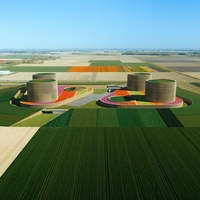






Energy Transition Debt Fund I
Energy Transition Debt Fund I invests in a diversified portfolio of leading European infrastructure debt funds, providing asset-backed loans across power generation, storage, and grid systems, with a strong focus on capital preservation and income generation.
What you invest in
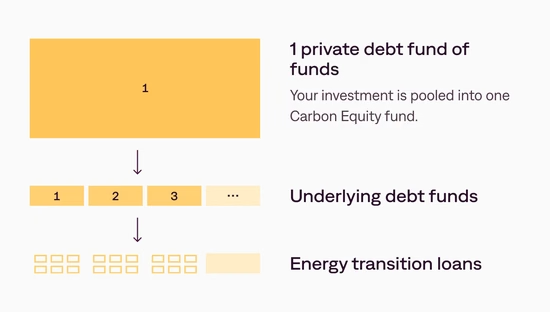
One investment into min. 3 leading debt funds, with 45-60 underlying loans to energy transition infrastructure projects, primarily in Europe.
What you invest in
One investment into min. 3 leading debt funds, with 45-60 underlying loans to energy transition infrastructure projects, primarily in Europe.
- Finance loans to infrastructure projects such as solar parks, wind farms, battery storage and biomethane plants.
- Gain exposure to min. 3 specialist debt funds and 45-60 underlying infrastructure loans via a single investment.
- Get predictable revenues and relatively early cash yields because of underlying contracted interest and principal repayments
- Make direct and predictable climate impact with projects that reduce CO₂ emissions from day one.
Why invest now
A persistent funding gap in European infrastructure debt is meeting durable demand tailwinds.
Why invest now
A persistent funding gap in European infrastructure debt is meeting durable demand tailwinds.


 Why we invested in Fervo Energy, Harbinger and Reverion
Get an inside look at the investment case behind three of our portfolio companies, straight from the team that invested in them.
Watch the recording
Why we invested in Fervo Energy, Harbinger and Reverion
Get an inside look at the investment case behind three of our portfolio companies, straight from the team that invested in them.
Watch the recording
 6 min read
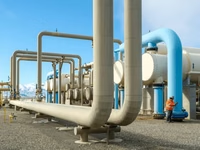
Carbon Equity launches Energy Transition Debt Fund I
New fund offers investors the chance to help build
European energy independence through loans for energy infrastructure
Read more
6 min read
Carbon Equity launches Energy Transition Debt Fund I
New fund offers investors the chance to help build
European energy independence through loans for energy infrastructure
Read more
 8 min read
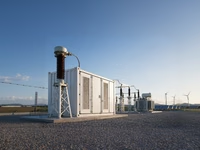
Decarbonization, energy security, and industrial growth: inside the EU’s Clean Industrial Deal
End of February 2025, the European Commission proposed Europe's Clean Industrial Deal. This new policy package aims to unlock over €100B for the decarbonization of heavy industry and create more demand for EU-made clean technologies. Here's what climate investors need to know about the EU's latest move to compete globally.
Read more
8 min read
Decarbonization, energy security, and industrial growth: inside the EU’s Clean Industrial Deal
End of February 2025, the European Commission proposed Europe's Clean Industrial Deal. This new policy package aims to unlock over €100B for the decarbonization of heavy industry and create more demand for EU-made clean technologies. Here's what climate investors need to know about the EU's latest move to compete globally.
Read more
Fees & terms
An overview of Carbon Equity's fees
Fees & terms
An overview of Carbon Equity's feesManagement fee
Tiered management fee based on commitment size.
| commitment size | management fee |
|---|---|
| <€100k | 0.85 % |
| €100k – €249k | 0.75 % |
| €250k – €499k | 0.65% |
| €500k – €999k | 0.55% |
| €1m+ | 0.45% |
Setup fee & fund expenses
One-off setup fee plus capped fund expenses.
Is this fund right for you?
For investors seeking lower-risk, income-generating exposure to the energy transition with a shorter time horizon than equity funds.
Is this fund right for you?
For investors seeking lower-risk, income-generating exposure to the energy transition with a shorter time horizon than equity funds.- Predictable, relatively quick cash yields based on underlying interest & principal repayments rather than returns dependent on an exit event.
- A shorter time horizon than venture or growth equity strategies, with an 8-year fund life.
- Stronger downside protection with tangible assets as collateral and by sitting senior in the capital stack, ahead of shareholders.
- Diversified exposure to real, operating European clean energy assets, such as solar parks, wind farms and battery storage.
- Help finance Europe's strategic energy independence and reduce CO₂ emissions.
- You're looking for an investment with higher upside potential or exposure to early-stage companies.
Key data & documents
Core characteristics of the fund’s return profile, structure, and scope.
Key data & documents
Core characteristics of the fund’s return profile, structure, and scope.
Investments
Investments will start after first close
Investments
Investments will start after first closeThis fund has not yet begun deploying capital. Portfolio companies will be added here as investments are made during the deployment period.
Frequently asked questions
-
What is a debt fund and how is it different from an equity fund?

A debt fund lends money to companies or projects, while an equity fund buys ownership stakes in them. This shapes the risk, return, and time horizon of your investment.
Equity funds buy shares and become co-owners. Returns come from selling those shares later at a higher value, typically when a company is acquired or goes public. The upside can be significant, but returns depend on the company growing in value over many years.
Debt funds provide loans. Borrowers repay the loan over a defined period, with interest. Returns come from those interest payments and the repayment of the principal. Compared to equity, debt funds typically offer:
- More predictable returns, from scheduled interest payments rather than uncertain future exits.
- Earlier and more regular distributions, starting soon after capital is deployed rather than years later.
- A different risk profile. Lower potential upside than equity, but also lower downside, because lenders are repaid before shareholders if a borrower runs into trouble and typically have tangible assets as collateral.
- Shorter duration, because loans have defined repayment schedules.
-
What are the steps to complete my investment?
Investing with Carbon Equity is easy and can be completed fully digitally:
- Explore our funds on the website, or book a call with our team to talk through your options.
- Create an account on our platform.
- Reserve your investment. This is a non-binding step that lets you continue onboarding.
- Complete your onboarding and sign your subscription form. This confirms your commitment.
- Receive your first capital call after the next close of the fund.
-
How much will my first capital call be?
The size of the first capital call varies by fund and depends on factors such as your country of residence, investor type, and total commitment. You can verify how much the first capital call is on the fund specific pages, see my.carbonequity.com/funds. As a general guide, the first call typically covers a portion of your commitment rather than the full amount, as long as you pay more than the legally required minimum. You can always see an estimate of your future expected capital calls in your investor dashboard.
-
How are fees structured across the funds?
Carbon Equity charges three types of fees, designed to align our incentives with yours and to keep total costs transparent.
A management fee, charged annually as a percentage of your commitment. The exact rate depends on the fund and your commitment size, with lower rates at higher tiers. This fee covers fund selection, portfolio construction, ongoing monitoring, reporting, and investor support.
A one-off setup fee, charged on subscription. Some funds do not charge a setup fee at all. Recurring investors typically receive a discount.
Ongoing fund expenses, capped at a defined percentage per year on average over the fund's lifetime. These cover legal, audit, administrative, and depositary costs.
For our fund-of-funds products, the underlying fund managers also charge their own fees, typically around 2% per year for venture capital and private equity and 1.5% for infrastructure, plus carried interest of around 20% on profits above a defined threshold. These are separate from Carbon Equity's fees and are paid out of the underlying funds' returns. Co-investment and debt funds invest more directly, removing this additional layer.
All fees are included in your capital calls, so you do not receive separate invoices during the life of the fund. Each fund page sets out the full fee structure, and total expected fees over the fund's lifetime are disclosed in the fund documents.
-
Can I request to qualify as a professional investor?
A professional investor is someone who, under European financial regulations, is considered to have the experience and financial capacity to make informed investment decisions without the same level of regulatory protection as retail investors.
Yes, you can request to qualify as a professional investor with Carbon Equity by meeting specific criteria related to your financial portfolio, professional experience, and transaction history. You can learn more on our professional opt-up page.
Because professional investors operate with fewer regulatory protections, regulations allow us to offer them more flexible terms:- A lower minimum investment than the standard ticket size for each fund.
- A smaller first capital call, expressed as a percentage of your commitment rather than a fixed minimum amount.
If you would like to discuss whether qualifying as a professional investor is right for you, please get in touch with our team.